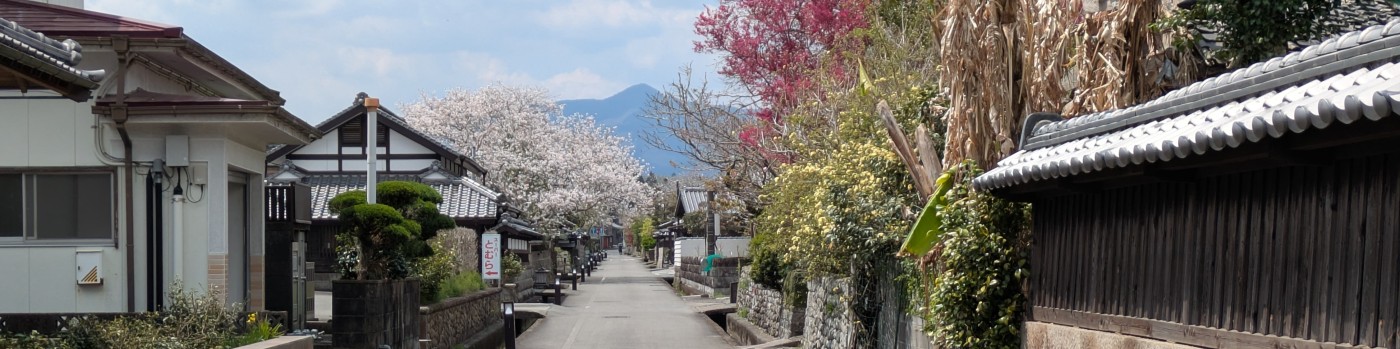
I work from Obi, a small samurai castle town in southern Kyushu. The studio is one room. The castle gate is a five-minute walk. The fastest broadband on the street is enough.
Obi (飫肥) was founded as a castle town by the Itō clan in 1588. It's sometimes called the Little Kyoto of Kyushu, which is generous — it's nowhere near as touristic, restored, or photographed as the actual Little Kyotos in the north. Most days you can walk through the historical district without seeing more than a handful of other people. The pace is the pace of a town that decided, around 1600, that this was about as big as it needed to be. Last busy period of the district was probably the 90's, ending with the economic bubble burst.
I don't think the place changes the software directly. A Rails app written in a co-working space in Shibuya and a Rails app written in a house in Obi would compile to the same bytes. What changes is the cadence around the work — the assumed shape of a day, the volume of background noise, the implicit pressure to be visible.
Slow software is, in part, software made by someone who isn't being interrupted very much. That's easier to engineer from a town of fifteen thousand people than from a tech district. So Obi isn't a brand decision; it's an operational one. I happen to like the area.
The infrastructure here is mostly the same as Tokyo. Same fibre, the conbini is still open at three in the morning if you need, the post just takes probably a day longer. What you actually give up is proximity — the meet-ups, the unplanned coffees (I drink onky tea in fact), the conference five stations away. For some kinds of work that's a cost; for the kind I do, it's mostly just quieter.